Thursday, March 21, 2013

'The Springtime of the Soul' & 'The School of Repentance'


Dear Parish Faithful,

According to the calendar it is already Spring.  However, I presently remain somewhat skeptical when I am outside in the cold.  From what I understand, it may take a few more days before I am fully convinced that Spring has arrived. Be that as it may, we should realize that it is no coincidence that Great Lent falls primarily in the Spring, for we believe that Great Lent is the “springtime of the soul.”  Awakening from the slumber of sin and “the winter of our discontent,” we enjoy the renewal of life that both Great Lent and the paschal mystery promise to our interior lives as that same renewal is manifested outwardly in the world of nature.  It was the Russian philosopher, Nicholas Berdyaev, who said that “the grass grows and the flowers bloom within the Church.”  For it is within the Church that we learn that the cyclical renewal of nature is a “sign” of the once-and-for-all event of the Resurrection of Christ. The Resurrection is a springtime mystery.

The “springtime of the soul” arrives through repentance, so to change our metaphors for the moment, we also refer to Great Lent as the “School of Repentance.”  Our one true Teacher is Christ, but we also learn from the great saints.  The saints were disciples - which means “students” - of the Lord and they learned well and now pass that living Tradition down to us in various forms.  The “classroom” is the church, and the perfect “text” that teaches us about repentance, while simultaneously leading us into the spirit of true repentance, remains the Canon of Repentance by St. Andrew of Crete.  As a saint of the Church, he is also a teacher “certified” by Christ Himself.  (Our “homework” is to put into practice what we have learned in the classroom).  We again had excellent attendance yesterday evening for the third part of the Canon – many who returned for another evening together with some new “students” who came to learn the meaning of repentance from the prescribed text.  No one returns home untouched by this profound meditation on repentance.

One more opportunity yet remains for a final session in this “school of repentance” this evening, as we will chant the fourth and final part of the Canon of Repentance beginning at 7:00 p.m.  Think of taking advantage of a “free education” while it is being offered.  Hopefully for those who are busy during the day, a “night school” class is preferable.

Wednesday, March 20, 2013

The Great Canon: the Bible Alive and Speaking to Us

Dear Parish Faithful,


“Have Mercy on me, O God, have mercy on me”

We chanted the second part of St. Andrew of Crete’s Canon of Repentance yesterday evening, and the church was quite filled with children, teens and adults.  That is always highly encouraging, perhaps especially so during the first week of Great Lent when we enter into the spirit of the season.   As I like to say:  A good beginning is much more conducive to a good ending.  Hopefully that will continue this evening as we gather together again for the third part of the Canon.  For those unfortunately unfamiliar with this extraordinary Lenten  liturgical work, St. Andrew’s canon (a highly structured work combining prayer, theology and hymnography) weaves together a deeply profound cry of repentance based on both the Old and New Testaments – though drawing on the Old even more extensively than the New.  He employs the major figures of the Bible – both the righteous and the unrighteous – as images to be either imitated or rejected.   He speaks directly to our “soul” often in a convicting manner by reminding us of our sorry tendency to imitate the unrighteous in our pursuit of vain pleasures which leads to sin:

I have made mine the sin of Adam; I know myself deprived of God, of the eternal Kingdom and of bliss because of my sins …

I have not assumed the righteousness of Abel, O Jesus, not having offered to Thee either an acceptable gift, or divine deed, or pure sacrifice, or life immaculate …

Or,  in an encouraging manner the various troparia call us to imitate the righteous in a manner that will liberate our soul from sinful impulses:

Christ strengthened a paralytic, enabling him to rise and walk; He raised death a widow’s son, and healed the servant of a Roman officer.  By revealing Himself to the woman of Samaria, He made clear to you, O my soul, how to worship God in the Spirit.

Thus, we “apply” or “actualize” the Scriptures in an existential manner. This makes the Bible fully alive and a true “word” of God that speaks directly to us today.

The third part of the Canon of Repentance of St. Andrew of Crete will begin this evening at 7:00 p.m.

Monday, March 18, 2013

As We Embark on the Fast...


Dear Parish Faithful Friends in Christ,

Let us joyfully begin the all-hallowed season of abstinence; and let us shine with the bright radiance of the holy commandments of Christ our God, with the brightness of love and the splendor of prayer, with the purity of holiness and the strength of good courage.  So, clothed in raiment of light, let us hasten to the Holy Resurrection on the third day, that shines upon the world with the glory of eternal life.  (Matins of Monday in the First Week of the Fast).

I would like to wish one and all a blessed Lenten journey as we embark on the course of the fast on this “Clean Monday,” the first day of Great Lent.   We are well aware of the challenges ahead of us, but these challenges and our resolve to meet them with humility, but also with firmness of faith, only reinforces how essential it is to live according to the Orthodox Way as the surest preparation for the paschal mystery.  We have two basic choices to make:  to respond with perseverance as we “gird our loins” to cross over the desert of the fast en route to the “Land of the Living” where we encounter the Risen Lord.  Or … we can wimp out!  I trust that only the former choice is uppermost in your minds and hearts.

We are given the tools of  the ascetical life by Christ Himself:  prayer, almsgiving and fasting.  At our most basic biological level we need to eat and drink to sustain our lives.  Yet our passions transform that need into its opposite:  to live in order to eat.  As Christ teaches us:  “Man does not live by bread alone.”  That is the truth we would like to “taste” as we are tested by fasting.

In addition, we have the following tools to strengthen us in our Lenten efforts:

+  the many liturgical services unique to Great Lent;
+  the reading of the Scriptures;
+  faithfulness in prayer;
+  the confession of our sins in the Mystery of Repentance;
+  the love of our neighbor through almsgiving.

As I said yesterday in the homily:  come up with a “domestic strategy” which allows you to integrate the season of Great Lent into your lives; rather than reduce it to some symbolic gestures.  Be balanced, but be serious.

I hope to see many of you this evening as we chant the first part of the compunctionate Canon of Repentance by St. Andrew of Crete at 7:00 p.m.

Fr. Steven

Thursday, March 14, 2013

Lives Worth Judging


Dear Parish Faithful & Friends in Christ,

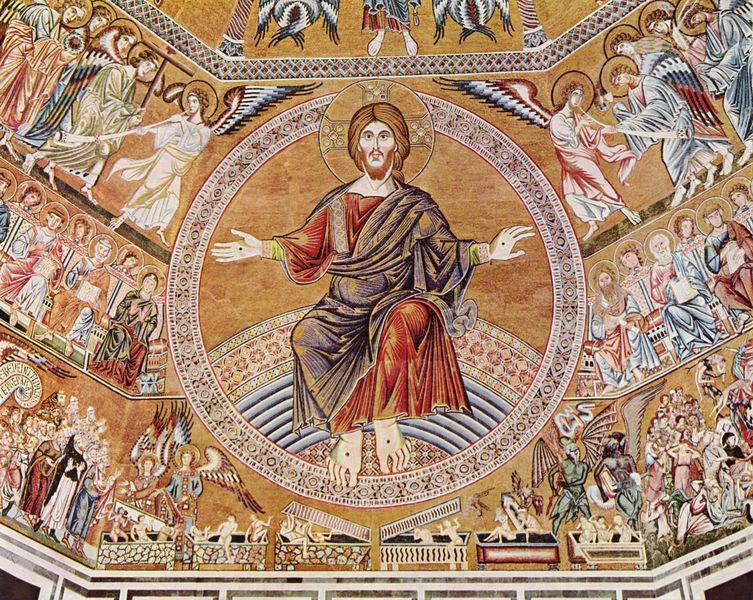
As we draw closer to the beginning of Great Lent – at least for Orthodox Christians – we are able to set our Lenten efforts against the background of the Last Judgment, thus giving us the “big picture” within which we live our lives and determine our personal destinies.  The Gospel read at the Eucharistic Liturgy just this last Sunday was that of the Parable of the Last Judgment. (MATT. 25:31-46)  Therefore, the second Sunday before Great Lent is also called the Sunday of the Last Judgment.  In parabolic form and with awesome imagery, the Lord speaks of His own Parousia as the glorified Son of man at the end of time and reveals to us that this will be a time of judgment.  And this judgment will lead to separation.  The “sheep” (the saved) will be placed on the right hand, and the “goats” (the lost) on the left hand of the eternal Throne of God.  This, in turn, will reveal the “quality” of our lives, though not in the way in which we today use the term “quality of life.”  We will be confronted with the question as to how well we served the Lord by how well we served the “least” of His brethren:  “Truly, I say to you, as you did it to one of the least of these brethren, you did it to me”  (MATT. 25:40).  These least are the hungry, the thirsty, the stranger, the naked, the sick and the prisoner.  How many of us have to admit that these are precisely the people that we neglect?  The fact that society removes such people from our sight does not offer a very reassuring excuse for our neglect.  It simply make it more convenient and less troubling for our consciences.  Sadly, this may point to one of the most glaring of “disconnects” between the Gospel and our Christian lives, expressed in the following hymn:

Alas, black soul!  How long will you continue in evil?  How long will you lie in idleness?  Why do you not think of the fearful hour of death?  Why do you not tremble at the dread judgment seat of the Savior?  What defense then will you make, or what will you answer?  Your works will be there to accuse you; your actions will reproach you and condemn you.  O my soul, the time is near at hand; make haste before it is too late, and cry aloud in faith:  I have sinned, O Lord, I have sinned against you; but I know your love for humanity and Your compassion.  O good Shepherd deprive me not of a place at Your right hand in Your great glory.  (Vespers, Sunday of the Last Judgment)

I, for one, am not ready to dismiss this hymn as excessively rhetorical, overly pessimistic, or unfairly harsh in its outlook.  It is rather a sober and honest plea calling us to repentance and the re-direction of our lives.  It further reminds us that it is never too late.  And that the Good Shepherd will place us upon His shoulders to the accompaniment of rejoicing angels in heaven over our repentance.

“God is love”  (I JN. 4:8).  And yet God is demanding.  If God “so loved the world that He gave His only Son” to die on the Cross for our redemption, then God expects us to approach and treat others with the same love.  This is a love expressed in action and in giving, and is not to be confused with emotions or feelings.  We are all outcasts and alienated from God based upon the primordial sin of Adam, and yet God did not forget us or abandon us.  “You were bought with a price” (I COR. 6:20).  If we are indeed to “imitate the divine nature” as St. Gregory of Nyssa taught, then we could convincingly say that God expects us to “perform” according to the full capacity of our human nature made in the “image and likeness of God.”  All the more plausible and possible because our fallen human nature has been renewed in and through the Death and Resurrection of Christ.  Our rescue from a condition of “ontological poverty” is meant to arouse in us a desire to rescue “the least of these” from the impoverishing conditions of a fallen world.

Simultaneously with the external history of our lives there is occurring the internal history of our hearts.  The outer life is more readily open to being accurately recorded, from the date of our birth to the date of our death and the significant events in between that make up our personal histories.  What is happening within our hearts is far more difficult to record, because the human heart is deep and mysterious.  Yet the Parable of the Last Judgment, testing the direction of our hearts, raises some very real questions:  On what we call the “spiritual level,” is our heart expanding or contracting?  Is it growing larger or smaller?  Is it becoming more generous or more grasping?  Is it letting the neighbor in, or keeping the neighbor out?  Is it, as the years move inexorably forward, embracing God and neighbor, or is it shrinking in self-protection?  These are questions to explore as we move into the Lenten season.

If our lives are worth living, then they are worthy of being judged.  Our deeds, words and thoughts are significant because we must answer for them before a God who is love.  Since God loves us and save us, God will also judge us, though our judgments is actually self-inflicted and not imposed on us as a punishment.  In a wonderful article entitled “On Preaching Judgment,” Fr. John Breck put it this way:


Judgment is indeed self-inflicted.  God offers us life, and we choose death.  He opens us the way into the Kingdom of Heaven, and we continue down our own pathway, which leads to destruction.  Yet like the father of the prodigal son, God pursues us along that pathway, desiring only that we repent and return home. It is our decision to do so or not.  (God With Us, p. 230)

In a bleak and cold universe absent of the presence of God and governed by immutable “laws of nature,” there is no judgment.  But what does that say about the significance of our lives?


Enter not into judgment with me, bringing before me the things I should have done, examining my words and correcting my impulses.  But in your mercy overlook my sins and save me, O Lord almighty. (Matins Canon of the Sunday of the Last Judgment, Canticle One)

Friday, March 8, 2013

Self-Awareness and the Goal of Great Lent


Dear Parish Faithful & Friends in Christ,

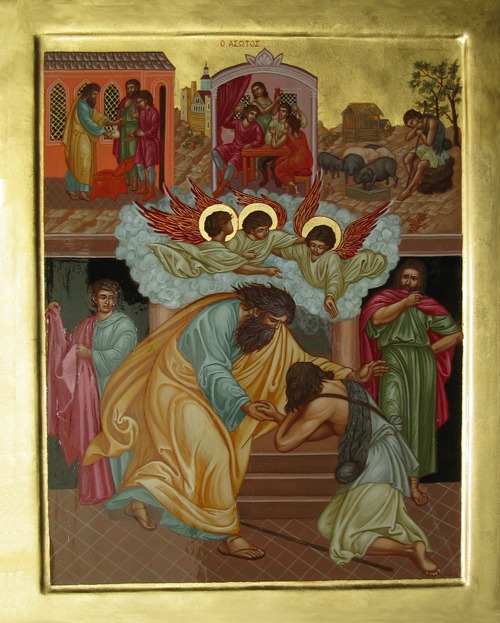
“Not many days later, the younger son gathered all he had and took his journey into a far country, and there he squandered his property in loose living.” (LK. 15:13)


In the Parable of the Prodigal Son (alternative titles could be “The Compassionate Father” or “The Unforgiving Brother”) we find the classic expression of a young person making the wrong decision and suffering the consequences of that decision.  Seeking that much-vaunted — but certainly over-rated — desire for “autonomy,” “self-fulfillment,” “independence” or similar assertions of the “self;” the so-called prodigal son only succeeds in squandering his portion of the inheritance and impoverishing himself in the dreary process.  Alone, friendless and desperate, this young man is reduced to feeding the pigs in a “far country” and narrowing his former grandiose plans down to a narrow desire for self-survival.  Not every such journey into self-assertion necessarily ends in such a spectacular demise, but the parable as unforgettably delivered by Christ rings quite true to life.  Jesus is not moralizing, shaking his head, or clucking his tongue at the expense of this pathetic figure in his parable.  Rather, the prodigal son is elevated to tragic dimensions because he is representative of any human being – of any age – who, through self-will, lack of vigilance or sheer carelessness can waste his/her God-given gifts along a path with “no exit.”  This aberrant  life-decision will then demand a further hard decision:  to make one’s way back to authentic life – and for Christ that means returning to our heavenly Father in repentance, humility and self-emptying – or falling into a further despair that ends in hopelessness.  The Gospel always presents the gift of hope, and that is why it is “Good News.”

In the parable, the prodigal son “came to himself” and made the decision to return to his father and throw himself upon his father’s mercy.  He did not know how his abandoned father would react.  Therefore, he took the risk of a possible further rejection that would have been devastating.  However, he was “surprised by joy” and the loving embrace of his compassionate father who, in turn, rejoiced at the return of his lost son.  The other brother, of course, remained displeased, envious and angry with his father’s forgiving attitude.  The parable takes on a universal dimension when we realize that it describes our own relationship with God and the openness to a new life through genuine repentance.  Others may not be convinced, but it is God who can discern out inner heart and the authenticity of our repentance when it wells up within us as we languish in a “far country” with a mind and heart that are far from God.  There is no better description of the meaning of repentance that the one given by Archbishop Kallistos Ware in his now-classic The Orthodox Way:

“Correctly understood, repentance is not negative but positive.  It means not self-pity or remorse but conversion, the re-centering of our whole life upon the Trinity.  It is to look not backward with regret but forward with hope – not downwards at our own shortcomings but upwards at God’s love. It is to see, not what we have failed to be, but what by divine grace we can now become; and it is to act upon what we see. “  (p. 113-114)

If we have no self-awareness of being lost in a “far country.”  If we are not hungry for “something” other than the “good life” as conceived by a world totally devoid of God.  If we fail to see the need to repent and offer our lives back to God in humility and repentance.  If we have no real passion for a life committed to Christ. If that is our current spiritual condition, then we certainly have no need for Great Lent.  Great Lent has been called the “School of Repentance.”  As disciples of Christ (disciple means “student”), we look to our Teacher – Jesus Christ – to guide us and direct us toward the realm of light and life – the Kingdom of God.  We may have to break through a formidable accumulation of “bad habits” that we have managed to entangle ourselves with over the years, and this will demand courage and perseverance.  But our goal is a worthy one:  to hear our heavenly Father exclaim with joy what the father of the parable said when his wayward child returned:  “It was fitting to make merry and be glad, for this your brother was dead, and is alive; he was lost, and is found”  (LK. 15:32).